

May 21, 2026 | 05:00
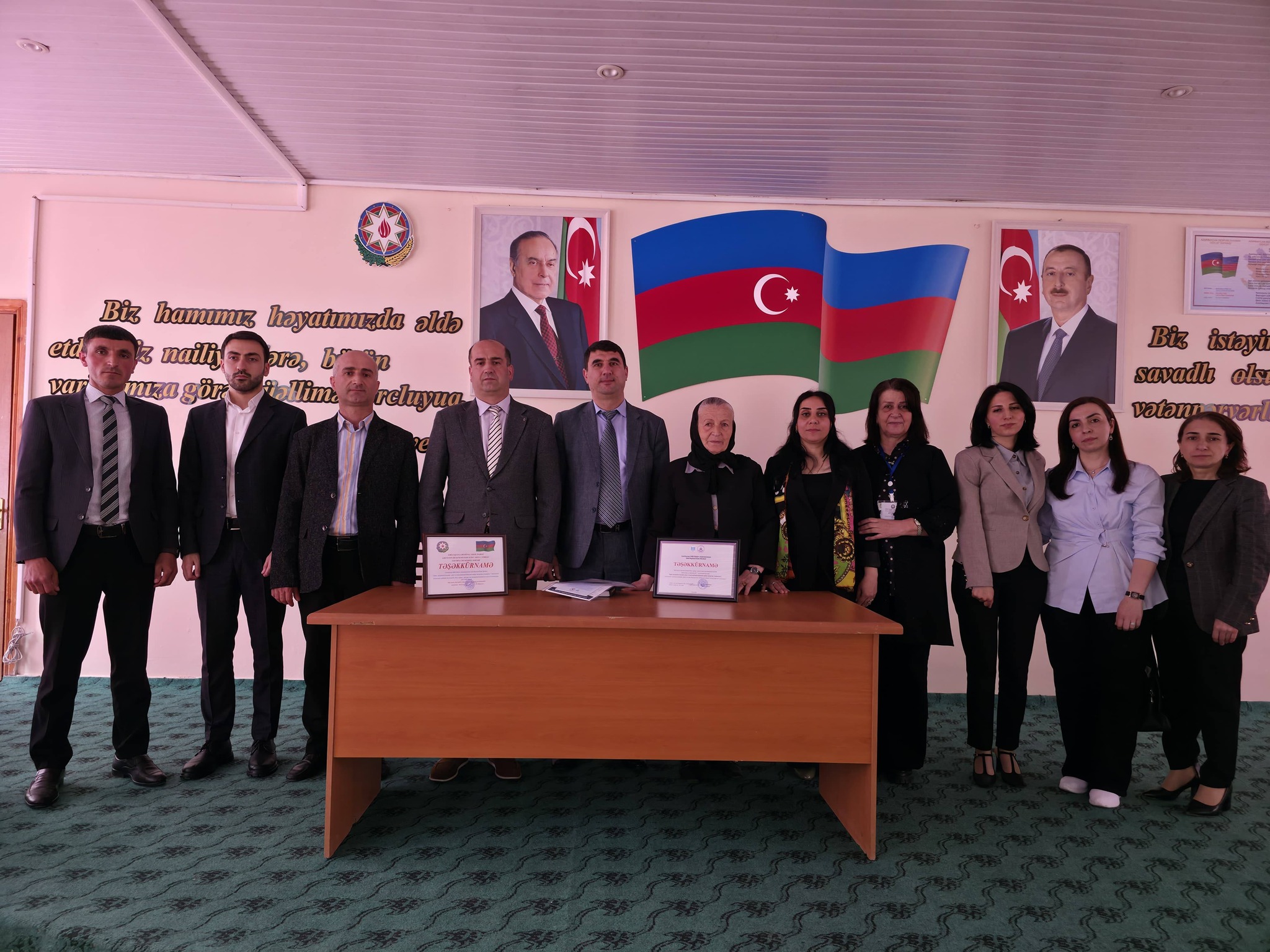
A seminar on "Modern architectural approaches in urban and rural planning against the backdrop of climate change" was held on May 21, 2026 in Heydar Aliyev Secondary School No. 1 in Kish village of Sheki within the framework of the "Year of Urban Planning and Architecture" organized by Sheki Regional Scientific Center of ANAS.
The event began with the playing of the National Anthem of the Republic of Azerbaijan. The dear memory of the architect of independent Azerbaijan, the national leader Heydar Aliyev and the sons of the Motherland who gave their lives for the independence, sovereignty and territorial integrity of our lands was commemorated with a minute of silence.
The seminar was opened by the head of the Ecological Geography Department of Sheki RSC, Ph.D. in Geography, Gafgaz Agabalayev, who spoke about the purpose and importance of the event. He emphasized that such educational events held within the framework of the “Year of Urban Planning and Architecture” play an important role in forming the ecological thinking of the younger generation, promoting the culture of urban planning and increasing knowledge about environmental protection.
Speaking at the event, Dursun Javadova, the mother of a martyr and also an honored teacher of the school, spoke about the importance of educating young people in a patriotic spirit. She stated that it is the moral duty of every Azerbaijani citizen to always keep the dear memory of our martyrs high, and advised students to be committed to the Motherland, land and national values.
Ismayil Balajayev, the director of Heydar Aliyev School, noted in his speech that such events dedicated to environmental issues and urban planning issues have a positive impact on the formation of a sense of responsibility for the environment among young people. He emphasized that the meetings between scientists and schoolchildren increase the interest of students in science and expressed his gratitude to the organizers of the event.
Then, employees of Sheki Regional Scientific Center made speeches and presented information on urban planning, protection of ecological balance and environmental protection to the participants.
Scientific worker of the Department of Ecological Geography
Aygun Ismayilova spoke on the topic “Cultural heritage and urban identity: the role of architectural monuments in tourism” and spoke about the importance of historical and architectural monuments in promoting cities and increasing their tourism potential. She noted that the preservation of ancient architectural examples is not only a means of preserving cultural heritage, but also an important factor contributing to the socio-economic development of regions, and their promotion at the international level is of great strategic importance. The speaker also emphasized the importance of preserving national architectural traditions and passing them on to future generations.
Junior scientific worker of the Department of Ecological Geography Elvin Rustamov made a report on the topic “Environmental problems in modern cities, the ecological and social significance of expanding green zones in cities”. He noted that as a result of the acceleration of the urbanization process, environmental problems such as air pollution, increased household waste and reduction of green areas have become more pronounced in cities. He noted that these factors both negatively affect people's health and lead to a disruption of the ecological balance. Elvin Rustamov emphasized that the expansion of parks, green belts and recreational areas creates conditions for the preservation of ecological balance, the formation of a healthy lifestyle for people and a more favorable urban environment.
Vafa Mammadli, a junior research fellow in the Department of Ecological Biophysics, made a speech on the topic "Biophysical Balance in Modern Urban Planning and WUF13 Priorities". She highlighted the importance of preserving biophysical balance in cities and noted that problems such as the heat island effect, air and water pollution have a serious impact on the urban environment.
The speaker noted that the cities of the future should be built not only on technological innovations, but also in accordance with the biophysical laws of nature. Vafa Mammadli highlighted the important role of expanding green infrastructure, applying hydrogeochemical approaches and using silk-based biomaterials in increasing the ecological sustainability of the urban environment.
The speaker also expressed the importance of building a sustainable and human-oriented city in accordance with the biophysical laws of nature, as proposed within the framework of WUF13.
Elvin Garayev, an employee of the Ecological Geography Department, delivered a report entitled “The Impact of Flood Processes on the Development of Settlements”. In his speech, he particularly emphasized the serious consequences of flood processes on urban infrastructure. He said that such natural phenomena cause damage to roads, bridges and other communication systems in settlements, and therefore, accurate design and proper risk assessment are essential when carrying out any construction and planning work.