

May 07, 2026 | 04:00
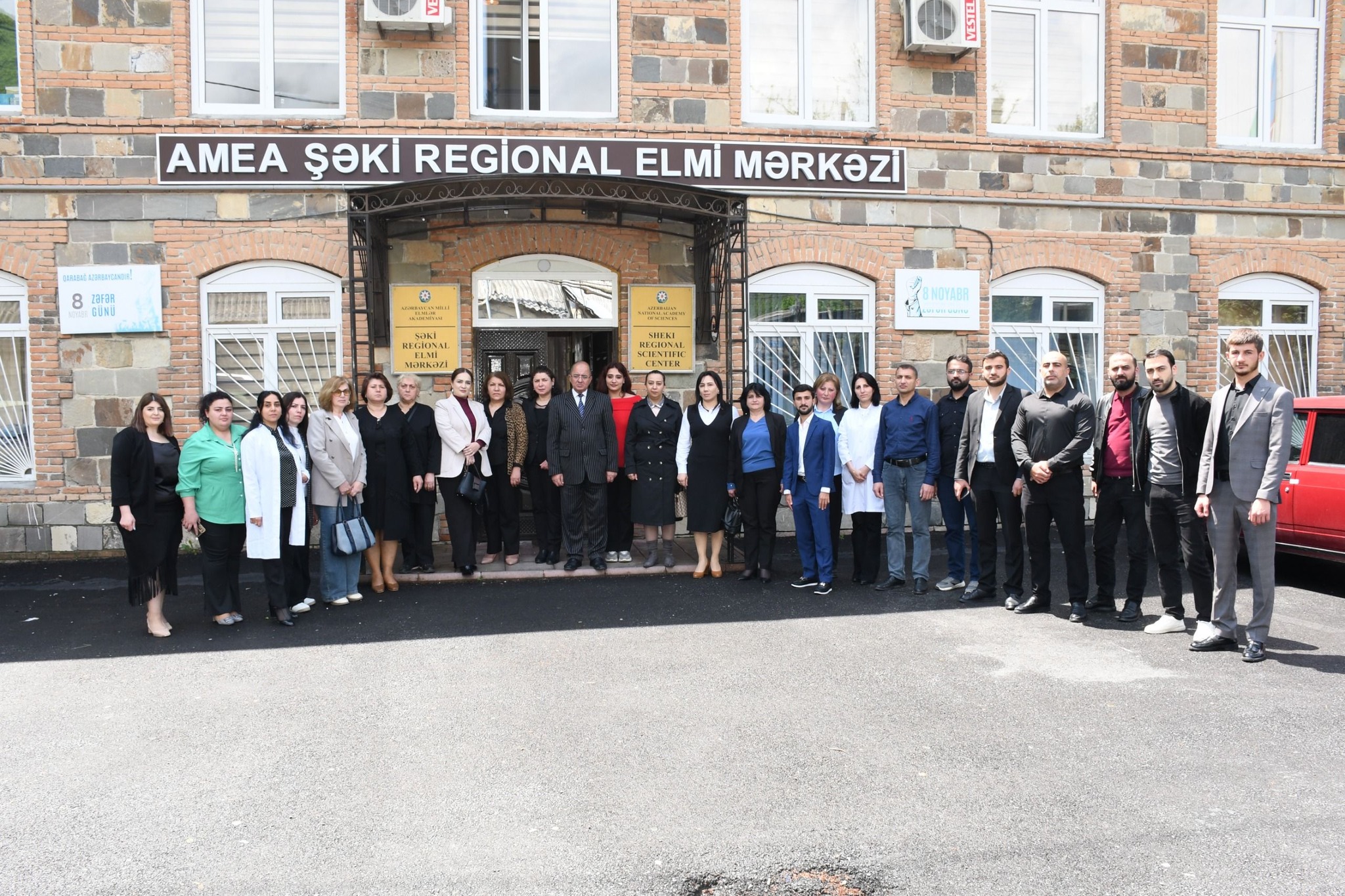
On May 7, 2026, a scientific-practical conference on the topic "Development of architecture in Sheki in the XVIII-XIX centuries" was held within the framework of the implementation of the Decree of the President of the Republic of Azerbaijan on the "Year of Urban Planning and Architecture" jointly organized by Sheki Regional Scientific Center of ANAS and the "Sheki "Yukhari Bash" National Historical and Architectural Reserve.
Acting director of Sheki Regional Scientific Center, doctor of philology, docent Kamil Adishirinov opened the conference with an introductory speech and spoke about the importance of the event. He said that the architectural traditions formed in Sheki in the 18th-19th centuries are an important part of the rich cultural heritage of Azerbaijan. The associate professor noted that the residential houses, caravanserais, mosques, bridges and other architectural monuments built during those periods still retain their historical and aesthetic value today. He emphasized that such events held within the framework of the “Year of Urban Planning and Architecture” play an important role in the study and promotion of the national architectural heritage and wished success to the event.
Speaking at the event on the topic “Sheki Khan Palace: considerations, historical truths and misconceptions”, Irada Yusifova said that the Sheki Khan Palace is one of the rare pearls of not only Azerbaijani, but also Eastern architecture as a whole. He noted that the architectural style of the palace, the patterns of carving used in its interior, the harmony of colors and the art of latticework reflect the high level of development of the 18th century Azerbaijani architectural school.
The speaker noted that there is contradictory information in various sources regarding the construction history of the Sheki Khan Palace, that some studies incorrectly indicate the date of construction of the palace, and that the linking of the construction to different periods does not coincide with historical realities.
Irada Yusifova noted that local craftsmen played a special role in the construction of the palace and that the architectural elements used here combine the rich traditions of the Sheki school of craftsmanship, and that preserving this heritage and passing it on to future generations is of great importance in terms of preserving our national and cultural values.
Then the floor was given to Sevil Mirzaliyeva, a scientific worker at the Sheki "Yukhari Bash" National Historical and Architectural Reserve. She made a report on the topic "Historical bridges of Sheki" and noted that ancient bridges occupy a special place among the historical and architectural heritage of Sheki. He noted that the complex relief of the city and the river network historically necessitated the construction of various types of bridges here, and these structures played an important role in the development of both transport and trade relations.
The speaker emphasized that the historical bridges of Sheki attract attention not only in terms of engineering, but also due to their architectural and aesthetic characteristics, and that traces of local architectural traditions and folk construction methods are clearly visible in these bridges built of stone and baked bricks, and noted that the preservation and restoration of historical bridges is of great importance in terms of preserving the national and cultural heritage.
Then the floor was given to Zamina Rasulova, a scientific worker at the "Reserve Management Center".
In her speech, the speaker noted that the territory of the "Yukhari Bash" National Historical and Architectural Reserve of Sheki is distinguished by its rich architectural heritage, and that the territory combines not only residential neighborhoods, but also important monuments reflecting the social and religious life of the city. She drew special attention to the historical baths located in the reserve, noting that they are an important part of both hygienic culture and public and social life.
Zamina Rasulova also noted that other historical and architectural examples in the reserve - residential houses, street structures and public buildings - have preserved the historical image of the city as a whole, and that the systematic study, restoration and transmission of this heritage to future generations is of particular importance.
At the end, the conference participants held extensive discussions around the topics, noting the topical relevance of the presented reports, and the importance of the continuity of such scientific and practical events was highlighted.